Oilfor frying: enough to cover about 1 inch in the pot
Tsuyu Sauce
Soy sauce: 2 tbsp
Sake: 2 tbsp
Mirin: 2 tbsp
Sugar: 1 tsp
Dashi powder: 1 tsp
Cold water: 3/4 cup
Method
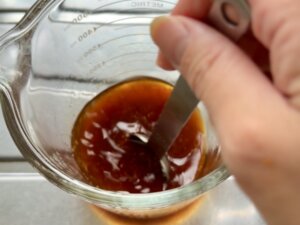
In a heatproof bowl, combine soy sauce, sake, mirin, sugar, and dashi powder. Microwave for about 1 minute, stir well, and chill in the refrigerator.
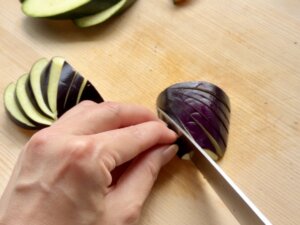
Prepare the vegetables. Make decorative radial cuts on the eggplant pieces and gently press them open. Remove the stems from the shiso leaves. Pat all vegetables dry and lightly dust them with cake flour.
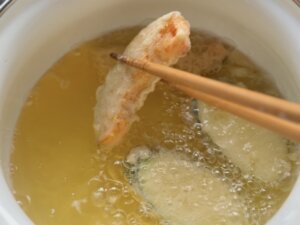
Heat the frying oil to 350°F (180°C). Drop a little batter into the oil. It should sink briefly to the bottom and then immediately float back up.
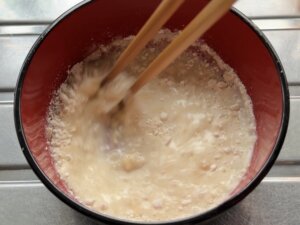
Just before frying, combine cold water, oil, and salt in a bowl. Add the cake flour and stir gently until combined. A few lumps are perfectly fine.
Dip the vegetables into the batter and fry until lightly golden and crispy. Transfer to a wire rack.
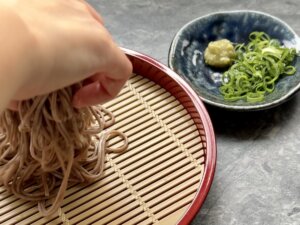
Cook the soba noodles according to the package instructions. Rinse thoroughly under cold running water and drain well.
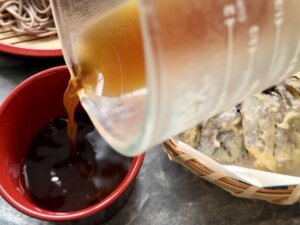
Add the cold water to the chilled tsuyu sauce and stir to combine.
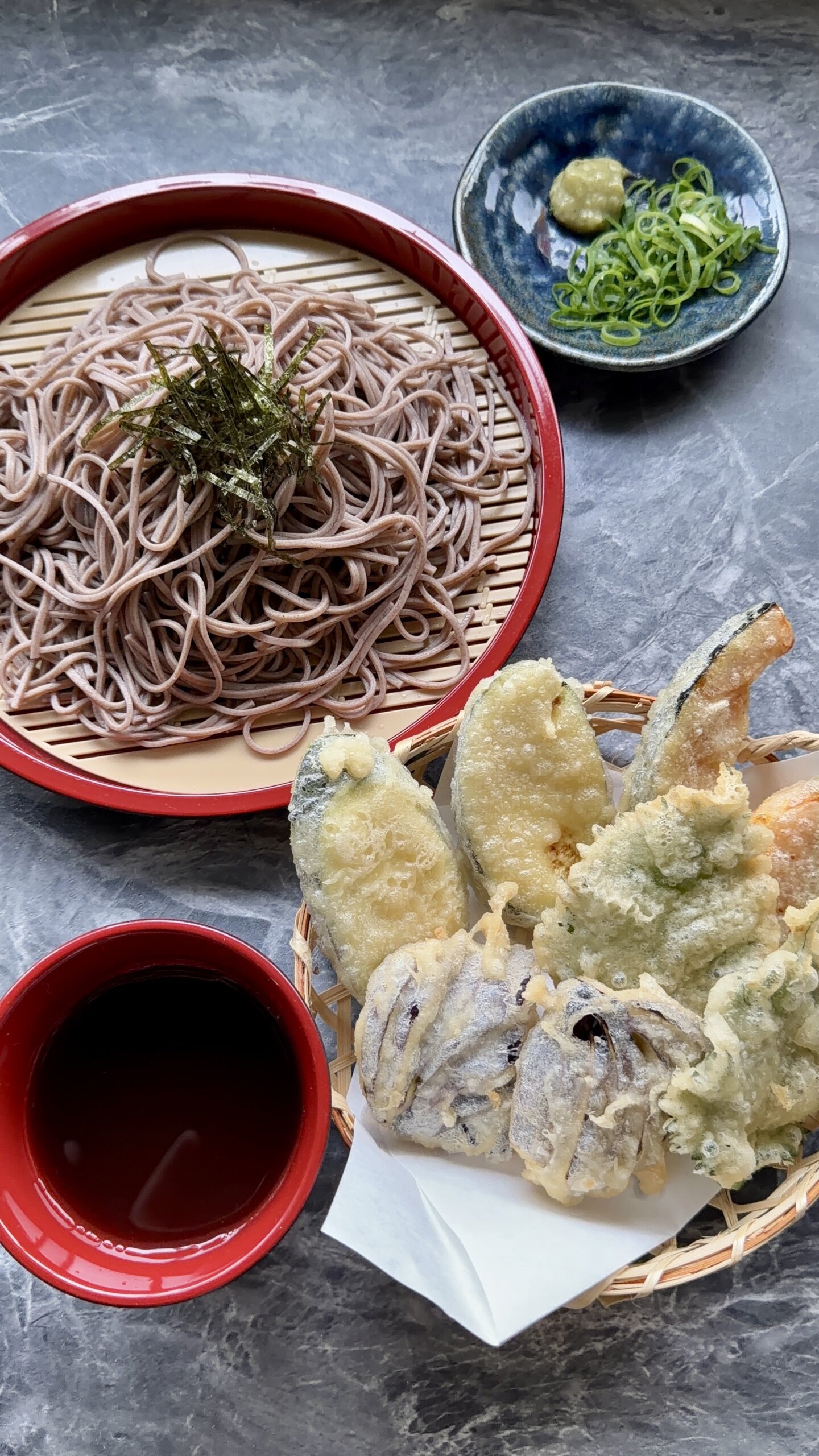
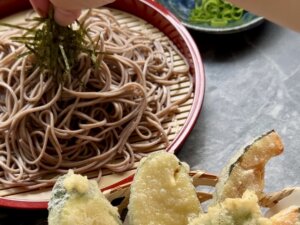
Arrange the cold soba noodles on a plate and top with shredded nori. Serve with the vegetable tempura, green onions, wasabi, and tsuyu sauce on the side. Dip and enjoy.
1. Add Oil to the Batter
Adding a small amount of oil to the batter can make a noticeable difference. The oil helps coat some of the flour particles, making it harder for excess moisture to penetrate the coating. As the tempura fries, moisture escapes more efficiently, creating a lighter and crispier texture without any special ingredients.
2. Use Cake Flour If You Have It
All-purpose flour works, but cake flour contains less protein, which helps create a lighter, crispier coating. If you have cake flour on hand, it is the better choice for tempura.
3. Dust the Vegetables with Flour
After patting the vegetables dry, lightly coat them with flour. This helps absorb surface moisture and allows the batter to adhere more evenly, resulting in a crispier finish.
4. Fry at 350°F (180°C)
The correct oil temperature is essential. To test it, drop a little batter into the oil. It should sink briefly to the bottom and then immediately float back up. This indicates the oil is around 350°F (180°C), the ideal temperature for tempura.
5. Don't overcrowd the pot.
Too many pieces at once will lower the oil temperature and affect the texture. Fry in batches and keep the pot no more than about 70% full.
6. Use a Neutral Oil
Avoid extra virgin olive oil or other strongly flavored oils. They have lower smoke points and can overpower the delicate flavor of the tempura. Refined neutral oils such as canola, vegetable, or avocado oil work best.
7. Make the Batter Right Before Frying
Do not prepare the batter too far in advance. Mix it immediately before frying to keep the batter at its best texture and help maintain a light, crispy coating.
8. Don’t Overmix the Batter
A few lumps are completely fine. Overmixing can negatively affect the texture, so stir only until the ingredients are combined.