
Nikuman is Japan’s take on the Chinese steamed pork bun.
In China, similar buns appear in dim sum, but they’re also everyday comfort food. In Japan, nikuman developed in a distinctly different direction and became a defining convenience store snack, especially during the winter season.
When I was in high school, there was a Lawson right near my school, and I would often stop in to buy one on the way home. There’s something comforting about holding a steaming nikuman on a cold day and taking bites while it’s still piping hot. Later, when I lived abroad, I found myself craving nikuman, and this nikuman recipe is what I used to recreate them.
Differences from Chinese Pork Buns

One of the notable differences between Chinese pork buns and Japanese pork buns lies in texture expectations. A signature trait of convenience store Japanese pork buns is their extremely soft and fluffy dough. That level of softness is not universal across all Japanese buns — many handmade or traditional versions are firmer — but convenience store nikuman buns are known for this light texture.
While difficult to replicate exactly, this method produces Japanese steamed buns that come relatively close to that familiar bite.
What Makes This Approach Different
This recipe prioritizes accessibility while reflecting the qualities many people associate with a Japanese meat bun.
In Japan, dough often blends flours, but this nikuman bun version uses all-purpose flour so you can make Japanese buns without specialized ingredients. The wrapping method seals the dough to form a diamond shape, which is beginner-friendly and less likely to open than pleated styles sometimes associated with Japanese bao buns or Japanese bao variations.
Diced onion provides sweetness and texture in the filling, supporting a softer and more approachable profile while still fitting comfortably within the broader category of steamed meat buns.
A Cross-Cultural Comfort Food

Though inspired by Chinese pork buns, niku man has become part of everyday Japanese food culture. Today nikuman buns are synonymous with convenience stores, reinforcing their identity as seasonal comfort food.
Whether referred to as pork buns, Japanese bao buns, or Japanese steamed buns, they represent an approachable bridge between traditions and home cooking. This guide is intended for anyone exploring how to make pork buns with accessible ingredients while capturing the experience many associate with Japanese pork buns.
Ingredients
Lukewarm water: ½ cup + 2 Tbsp (104°F / 40°C)
Dry yeast: 1 tsp
Sugar: ½ tsp
All-purpose flour: 1¾ cups
Baking powder: 1 tsp
Salt: ¼ tsp
Sugar: 2½ Tbsp
Rice oil: 1½ tsp
Onion, finely diced: 1 cup
Ground pork: 5 oz
Salt: ¼ tsp
Soy sauce: 1 Tbsp
Sugar: 2½ tsp
Sake: 1 Tbsp
Grated ginger: 1 tsp
Sesame oil: 1 tsp
Black pepper: 1/2 tsp
Cornstarch: 2 tsp
Instructions
- Combine lukewarm water, yeast, and sugar in a bowl, stir lightly, and let sit for 5 minutes until foamy.

- Add flour, baking powder, salt, sugar, and oil to the same bowl and mix until no dry flour remains, then cover and rest for 10 minutes.

- Sauté diced onion over medium heat until lightly browned and let cool completely.

- Place the dough bowl over warm water (about 113°F / 45°C) and allow it to rise for 30 minutes until slightly expanded.

- Punch down the dough, knead for about 3 minutes, divide into 7 portions, shape into balls, and rest for 15 minutes.

- Combine cooled onion with pork, salt, soy sauce, sugar, sake, ginger, sesame oil, black pepper, and cornstarch, mixing thoroughly until cohesive.

- Flatten each dough ball into about a 4-inch (10 cm) circle and place filling in the center, bring one pair of opposite edges together over the filling and pinch lightly, then bring the opposite pair together to form a diamond shape, pinch the four seams closed, gather the corners at the top and pinch together, pressing the tip down slightly to seal.

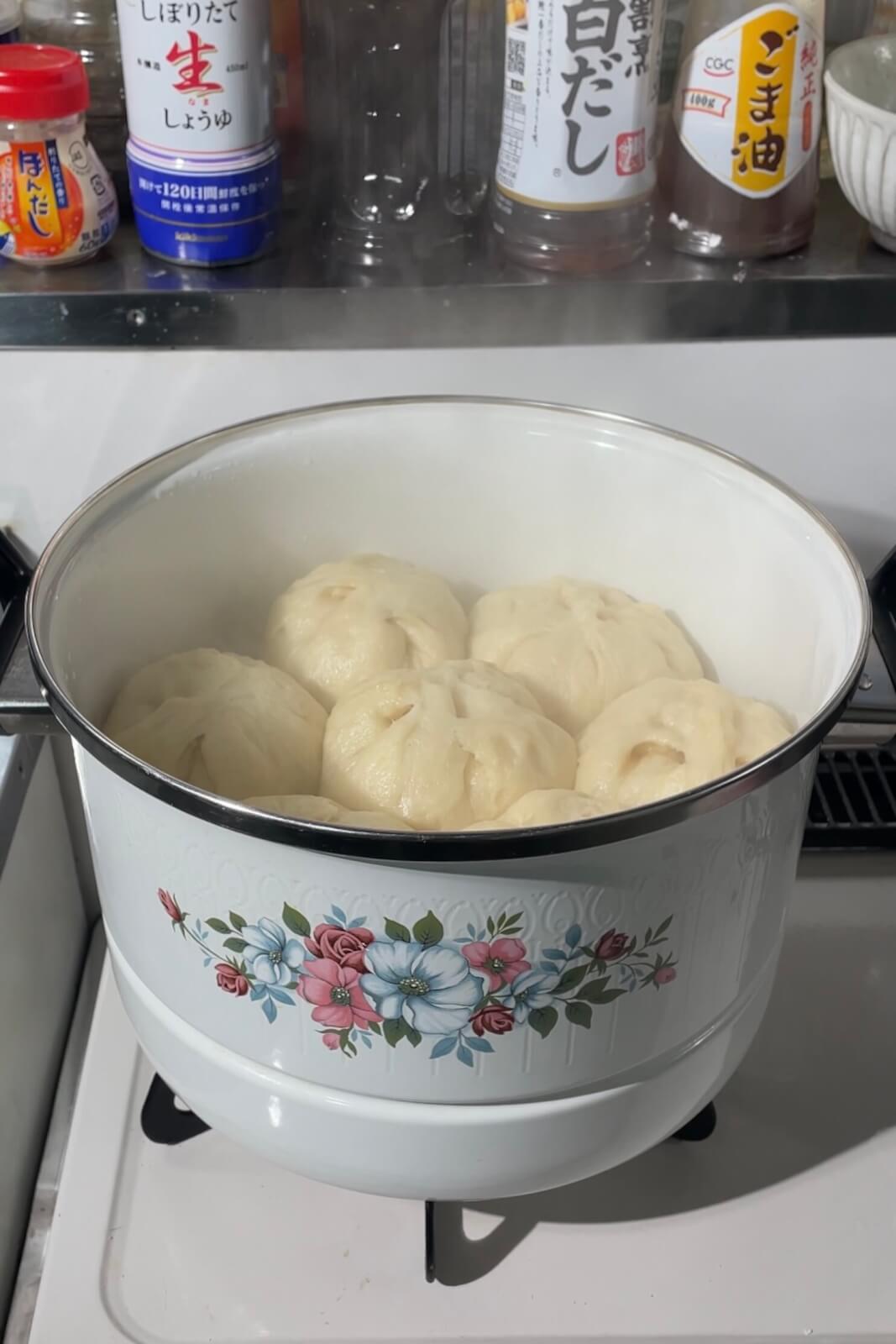
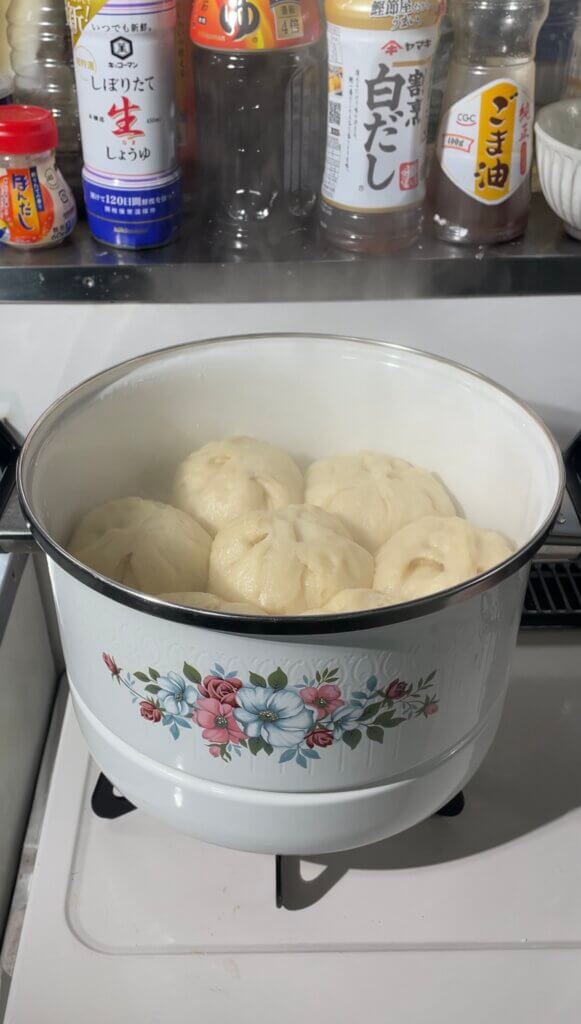
- Fill a steamer with water and bring it to a boil, place the buns inside, cover, turn off the heat, and let rest for 10 minutes.
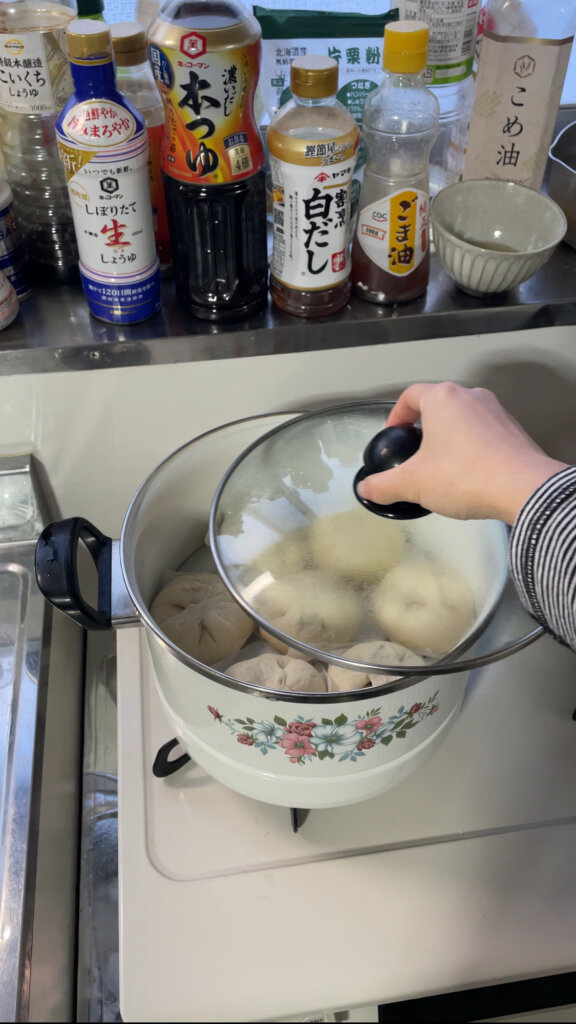
- Turn the heat back on, wait until the water returns to a full boil, then steam the buns for 15 minutes before removing.

Ingredients
Method
- Combine lukewarm water, yeast, and sugar in a bowl, stir lightly, and let sit for 5 minutes until foamy.
- Add flour, baking powder, salt, sugar, and oil to the same bowl and mix until no dry flour remains, then cover and rest for 10 minutes.
- Sauté diced onion over medium heat until lightly browned and let cool completely.
- Place the dough bowl over warm water (about 113°F / 45°C) and allow it to rise for 30 minutes until slightly expanded.
- Punch down the dough, knead for about 3 minutes, divide into 7 portions, shape into balls, and rest for 15 minutes.
- Combine cooled onion with pork, salt, soy sauce, sugar, sake, ginger, sesame oil, black pepper, and cornstarch, mixing thoroughly until cohesive.
- Flatten each dough ball into about a 4-inch (10 cm) circle and place filling in the center, bring one pair of opposite edges together over the filling and pinch lightly, then bring the opposite pair together to form a diamond shape, pinch the four seams closed, gather the corners at the top and pinch together, pressing the tip down slightly to seal.
- Fill a steamer with water and bring it to a boil, place the buns inside, cover, turn off the heat, and let rest for 10 minutes.
- Turn the heat back on, wait until the water returns to a full boil, then steam the buns for 15 minutes before removing.
Leave a Reply