

If you’ve ever wondered how to eat mochi, this guide will show you simple and traditional ways to enjoy Japanese mochi rice cakes, along with how to cook mochi, what mochi is made of, and where to buy mochi outside Japan. I will show you my 3 favorite ways to enjoy mochi!
What Is Mochi?
Mochi is a traditional Japanese food made from glutinous rice called mochigome. It has a soft, chewy texture and is enjoyed in both sweet and savory dishes.
Store-bought dried mochi is often sold as kirimochi — rectangular mochi rice cakes that can be boiled, grilled, pan-fried, or added to soup, while some mochi is made from rice flour (mochiko or shiratamako) instead of whole rice, especially for sweets like daifuku.
Many people ask, is mochi gluten free? Yes — mochi is naturally gluten free, though you should always check labels for added ingredients.
How to Eat Mochi
There are many ways to enjoy mochi, depending on whether you like sweet or savory flavors. Below are three classic answers to how to eat mochi in everyday Japanese cooking.
Sweet Mochi Flavors
Popular sweet mochi flavors include kinako (roasted soybean flour), walnut sauce, red bean paste, and even modern desserts like mochi ice cream.
These sweet styles are often served as small mochi bites, perfect with tea or as a light dessert.
Savory Mochi
Savory mochi is often grilled or pan-fried and seasoned with soy sauce, then wrapped in nori or added to soup.
How to Cook Mochi
If you’re using fresh mochi, you can enjoy it right away. If you’re using dried or frozen mochi rice cakes like kirimochi, here’s how to cook mochi:
- Boil until soft and puffy
- Pan-fry over medium heat until golden and chewy
- Grill in a toaster oven or pan
Once soft, mochi can be coated, wrapped, or topped as you like.
Where to Buy Mochi
In Japan, mochi is widely available at supermarkets, confectionery stores and even at convenience stores.
Outside Japan, you can usually find mochi at Asian grocery stores, Japanese markets, or online retailers. Look for packages labeled “mochi rice cakes,” “kirimochi,” or “glutinous rice (mochigome).”
My favorite ways to enjoy mochi
Mochi is simple, comforting, and incredibly versatile. Whether you enjoy it as sweet mochi bites, savory grilled mochi, learning how to eat mochi opens the door to many delicious traditions. Now, I will show you my favorite ways to eat mochi.
1. Kinako Mochi
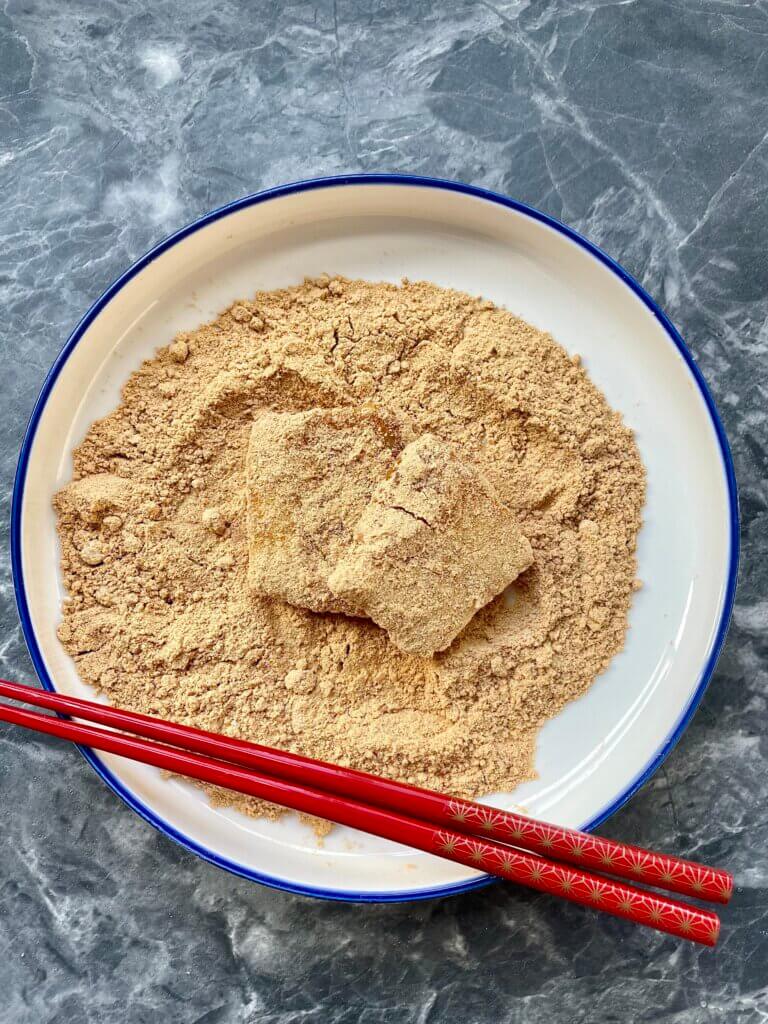
Kinako mochi is a simple and gentle sweet made by coating soft mochi with a mixture of kinako (roasted soybean flour), sugar, and a pinch of salt. The flavor is nutty, slightly sweet, and comforting, with a soft, powdery coating that melts into the warm mochi.
This is one of the most common home-style desserts in Japan, often enjoyed as a light snack or after-meal sweet, especially in winter.
Ingredients (for about 4 pieces)
Kinako (roasted soybean flour): ¼ cup
Sugar: ¼ cup
Salt: ¼ tsp
Fresh mochi: 4 pieces
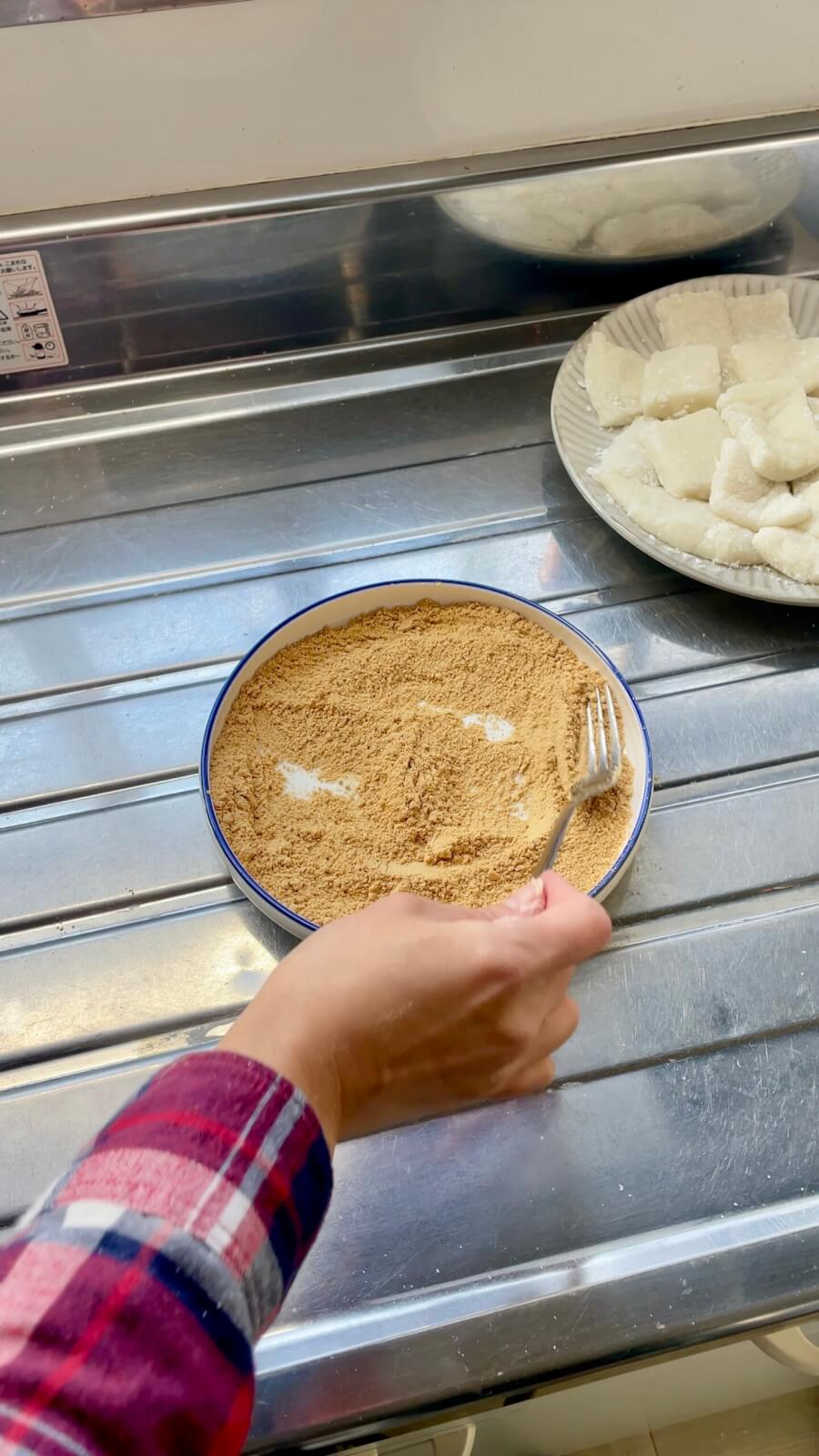
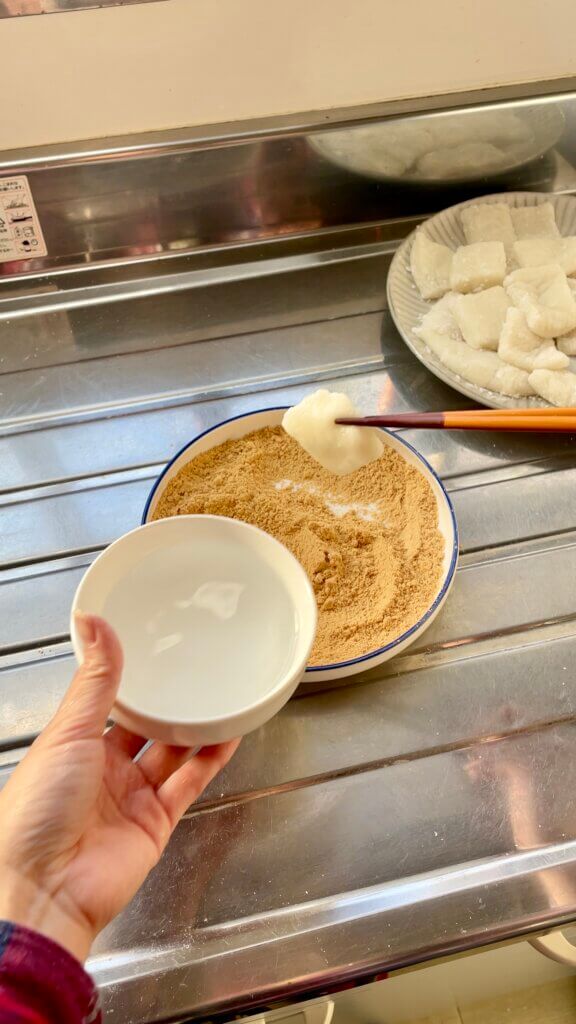
Instructions
Mix the kinako, sugar, and salt in a plate.
Lightly dip the soft mochi in warm water to moisten the surface, then roll it in the kinako sugar mixture until evenly coated.
Note: If using dried kirimochi, boil until soft, then proceed the same way.
2. Walnut Sauce Mochi
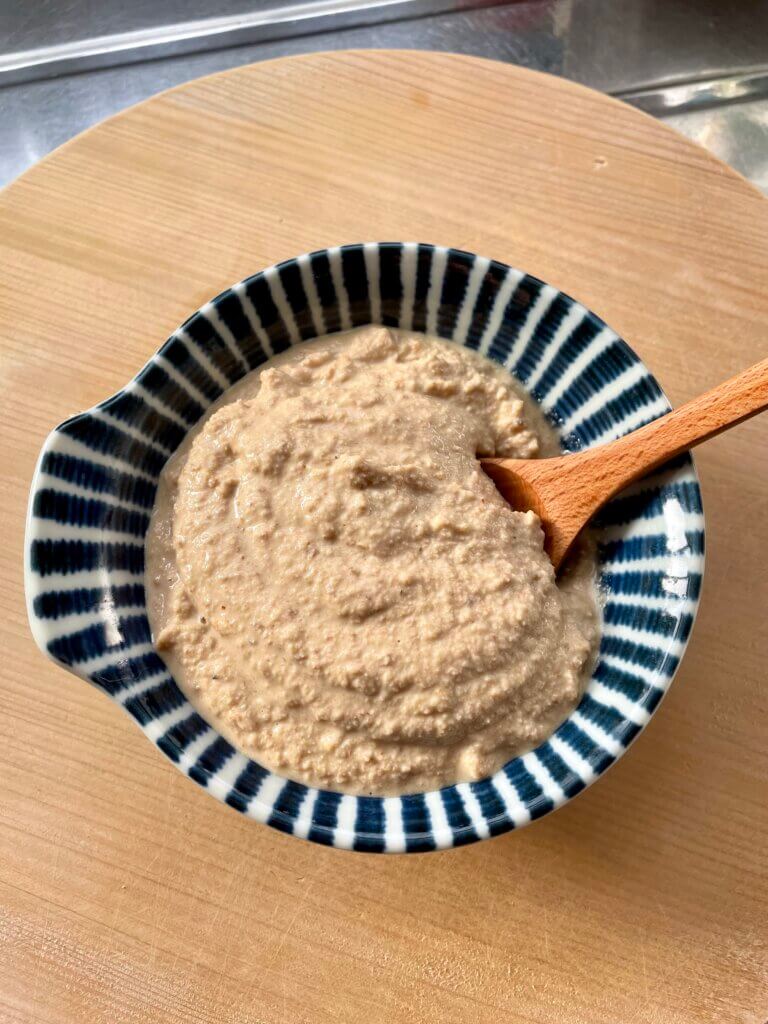
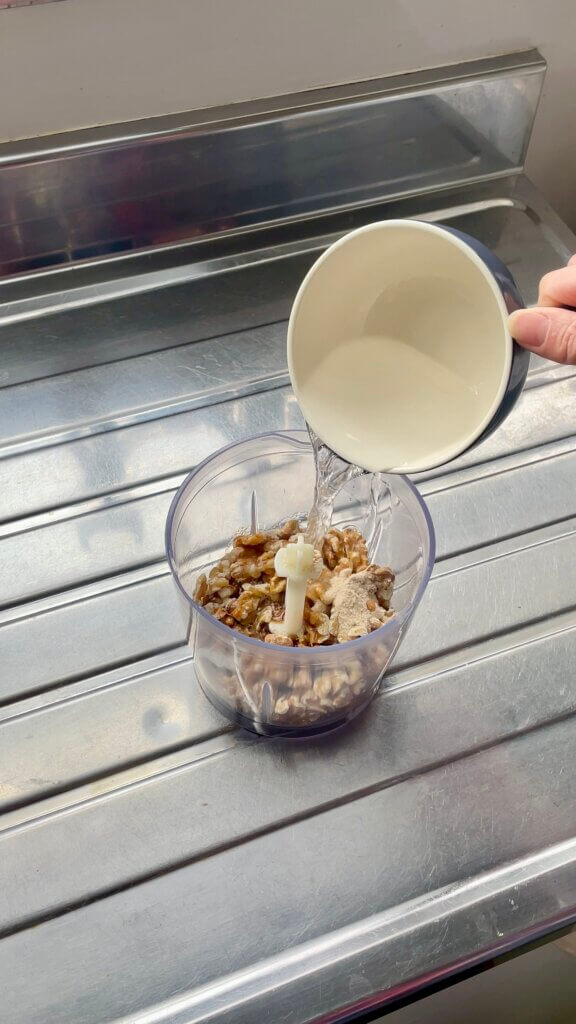
Walnut sauce mochi is made by blending roasted walnuts with sugar, soy sauce, and a small amount of warm water (about 120°F / 50°C).
The warm water helps the walnuts release their natural oils and blend smoothly, making the sauce creamy instead of grainy. It also helps dissolve the sugar more evenly, so the sauce comes together thick, glossy, and well balanced.
Ingredients (for about 4 pieces)
Roasted walnuts: 1 cup
Warm water: 7 Tbsp
Soy sauce: 1 Tbsp
Sugar: 2½ Tbsp
Fresh mochi: 4 pieces
Instructions
Place the walnuts, warm water, soy sauce, and sugar in a blender or food processor. Blend until smooth and creamy.
The sauce will turn pale and slightly milky as it emulsifies — blend well until the texture is thick and glossy.
Spoon the sauce over the mochi and serve.
3. Isobe Mochi (Soy Sauce & Nori Mochi)
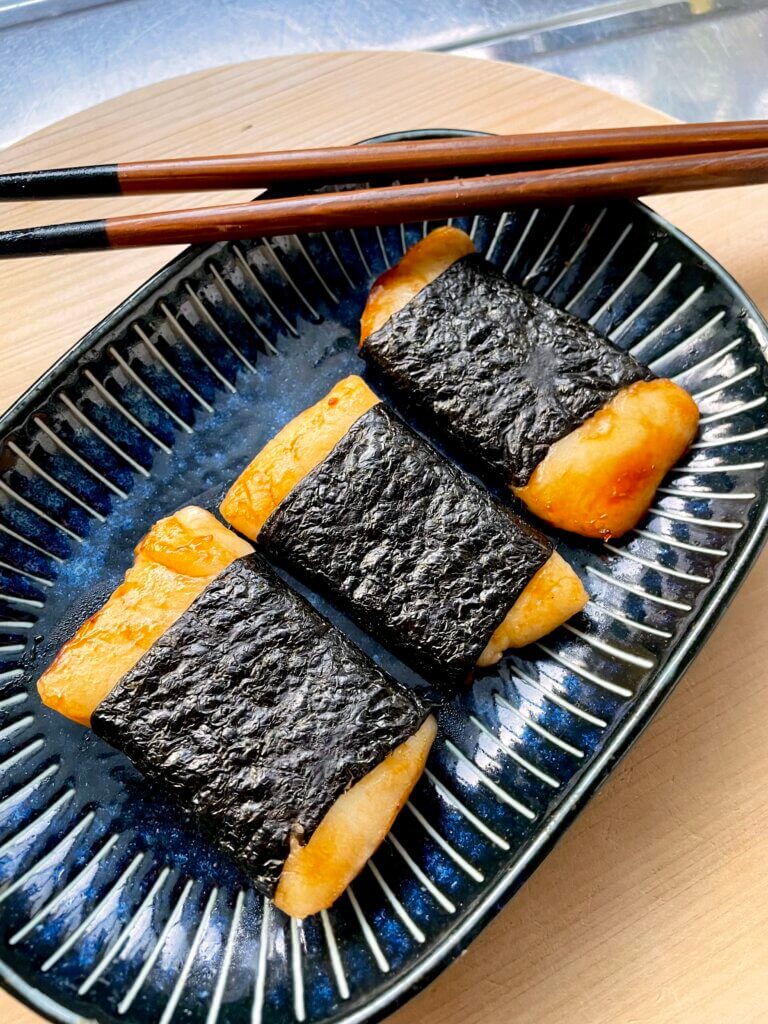
Isobe mochi is a savory version of mochi, coated with a light soy sauce glaze and wrapped in a strip of nori seaweed.
The flavor is salty, little sweet and deeply satisfying — often eaten as a snack, light meal, or late-night comfort food. It’s one of the most nostalgic and familiar ways people in Japan enjoy mochi at home.
Ingredients (for 4 pieces)
Fresh mochi: 4 pieces
Soy sauce: 1 Tbsp
Sugar: ½ Tbsp
Nori: ½ sheet (cut into 4 strips)

Instructions
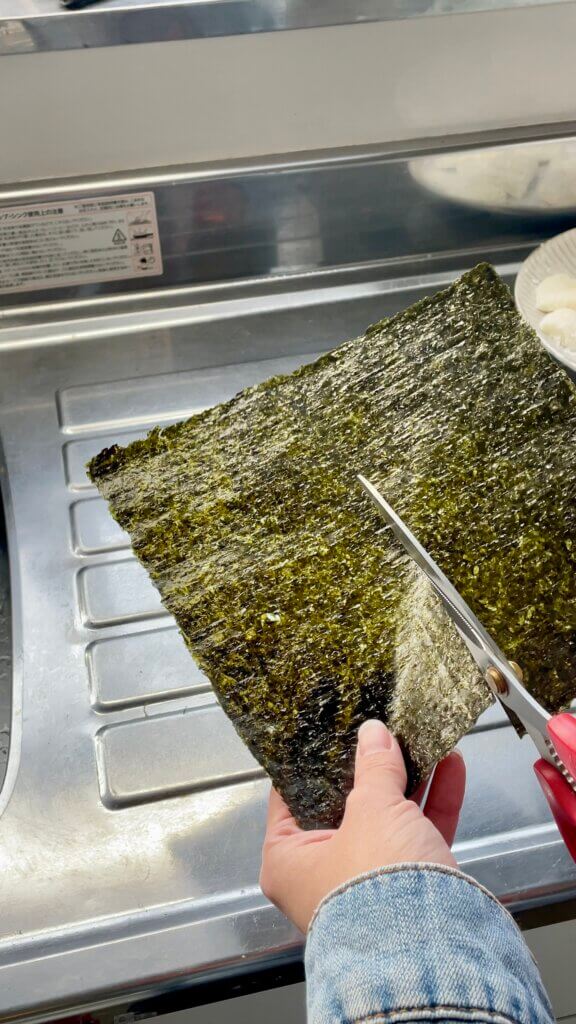
Cut the nori sheet in half, then cut the half into 4 strips.
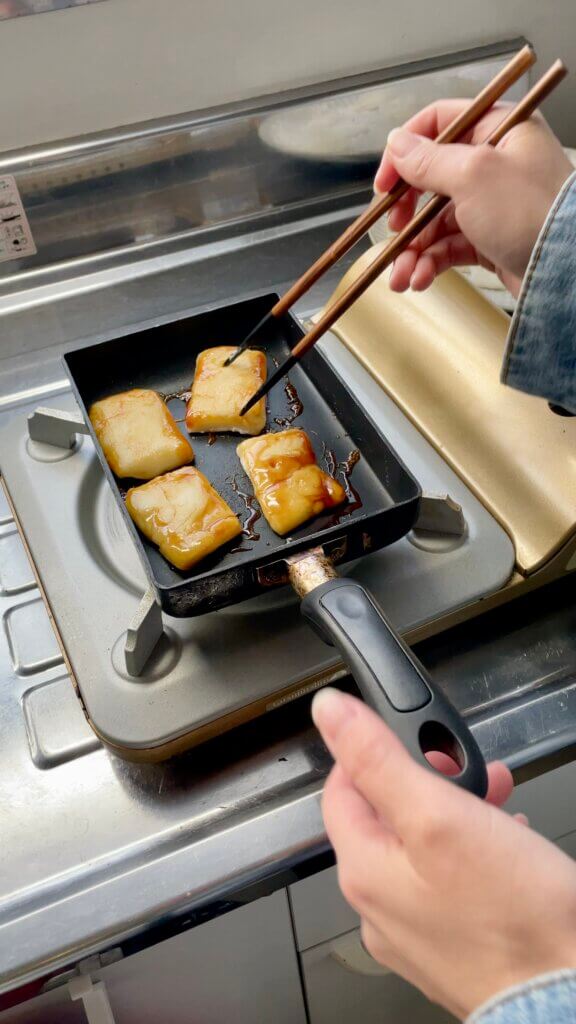
In a frying pan over low heat, add the soy sauce and sugar and gently melt the sugar.
Add the mochi and turn gently to coat the surface with the sauce. Remove from the pan once coated — do not let the sauce burn.
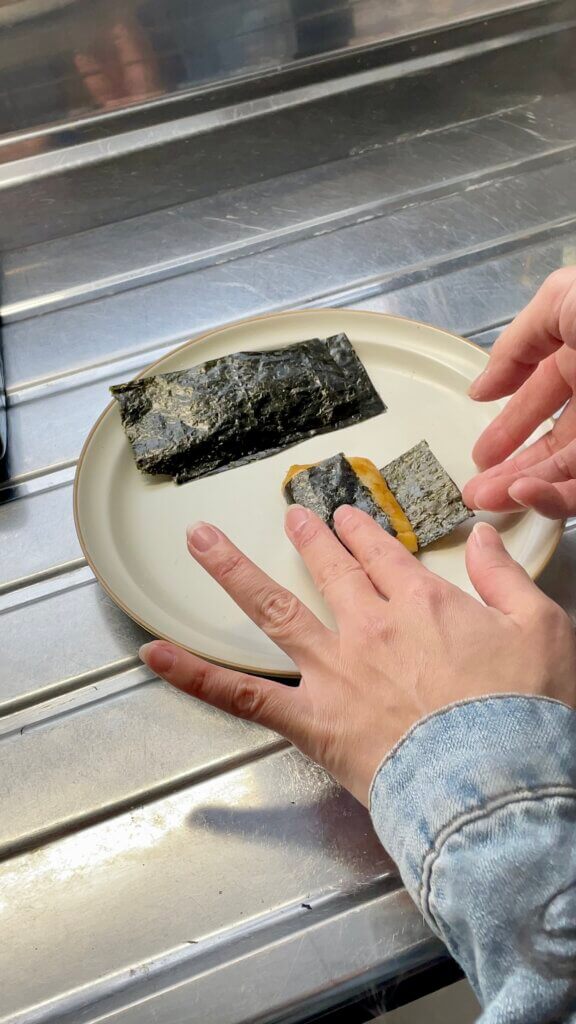
Wrap each piece of mochi with a strip of nori, shiny side facing out.
Notes:
• Soy sauce burns easily, so keep the heat low and watch carefully.
• If using dried kirimochi, pan-fry it first over medium heat with a little oil and a lid on, turning both sides until soft, then proceed with the sauce.
Ingredients
Method
- Kinako mochi
- Mix the kinako, sugar, and salt in a plate.
- Lightly dip the soft mochi in warm water to moisten the surface, then roll it in the kinako sugar mixture until evenly coated.
- Note: If using dried kirimochi, boil until soft, then proceed the same way.
- Walnut Sauce Mochi
- Place the walnuts, warm water, soy sauce, and sugar in a blender or food processor. Blend until smooth and creamy.
- The sauce will turn pale and slightly milky as it emulsifies — blend well until the texture is thick and glossy.
- Spoon the sauce over the mochi and serve.
- Isobe Mochi (Soy Sauce & Nori Mochi)
- Cut the nori sheet in half, then cut the half into 4 strips.
- In a frying pan over low heat, add the soy sauce and sugar and gently melt the sugar.
- Add the mochi and turn gently to coat the surface with the sauce. Remove from the pan once coated — do not let the sauce burn.
- Wrap each piece of mochi with a strip of nori, shiny side facing out.
- Notes:
- Soy sauce burns easily, so keep the heat low and watch carefully.
- If using dried kirimochi, pan-fry it first over medium heat with a little oil and a lid on, turning both sides until soft, then proceed with the sauce.

Leave a Reply