
What Is a Japanese Ramen Egg?
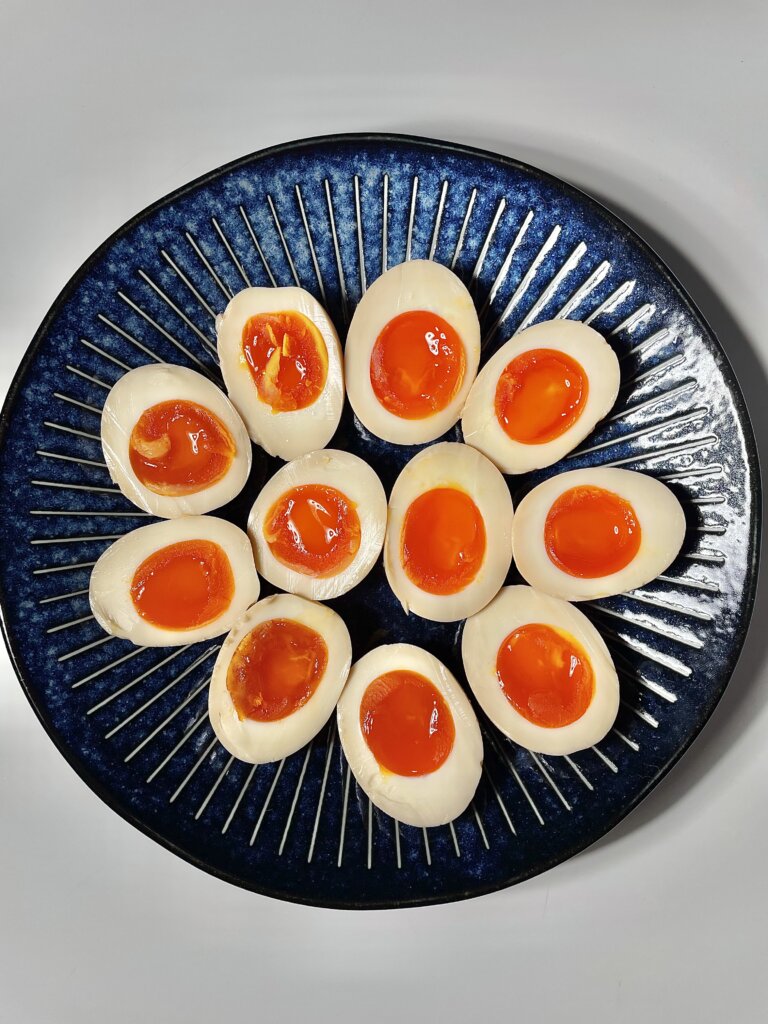
If you’ve ever ordered ramen and paused before eating just to admire that glowing center, you’ve already met a Japanese ramen egg. Also known as ajitsuke tamago, ajitama egg, or aji tamago, this marinated soft-boiled egg is one of the most iconic toppings in ramen culture.
Many people search for how to make ramen eggs that looks restaurant-quality. The good news is that it’s not complicated. The technique is simple. The precision is what matters.
The Texture Everyone Is Chasing

When people look up how to make eggs for ramen, what they really want is that perfect yolk texture. Not runny. Not chalky. Not too soft. Not fully set.
The goal is jammy.
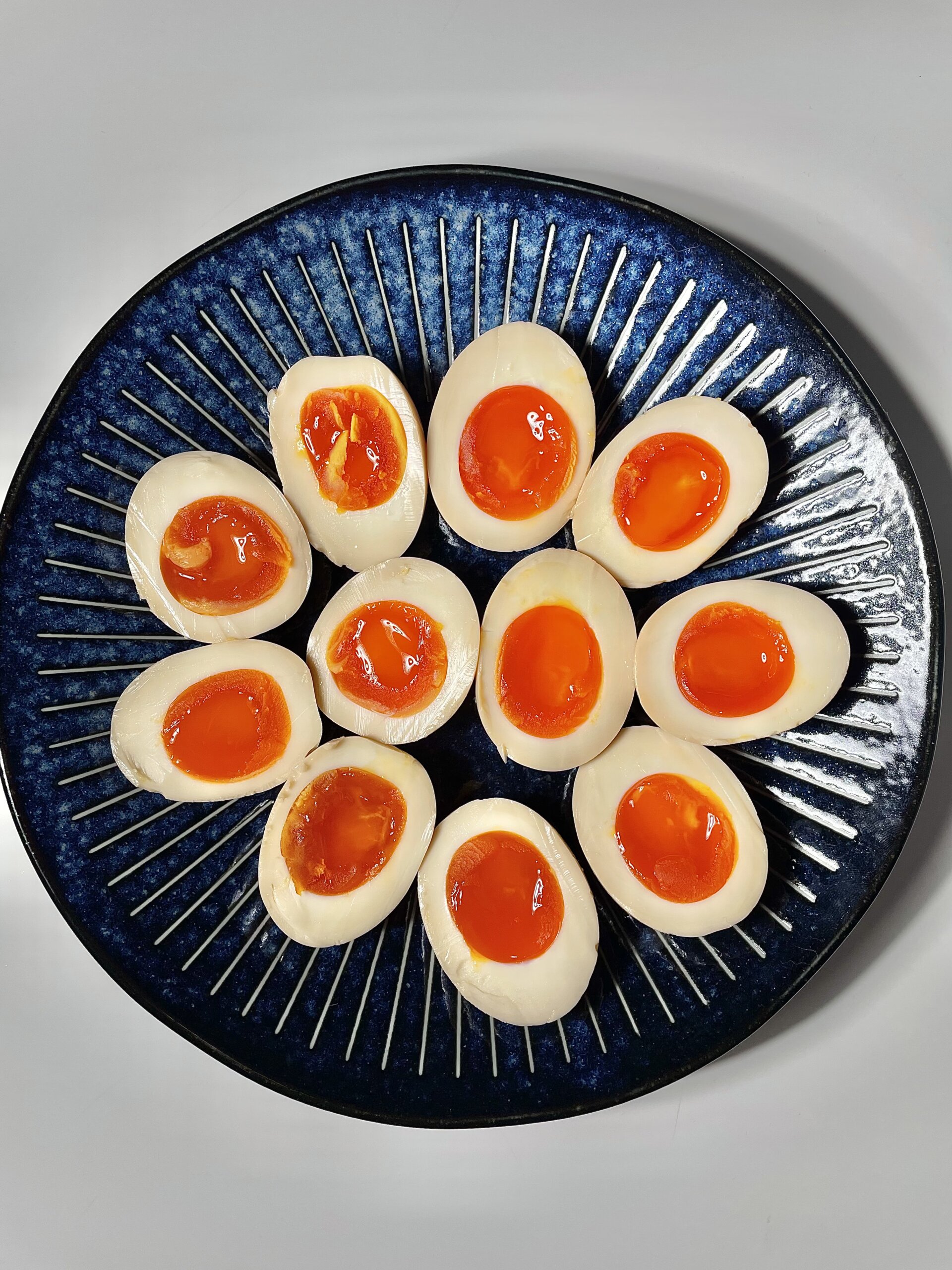
Through repeated testing of this ramen egg recipe, I found that boiling time alone doesn’t create that jewel-like center. The marinade time is just as critical. The yolk should look glossy and almost radiant when sliced — rich, custard-like, and structured without being firm.
The Ramen Egg Marinade

A proper ramen egg marinade is balanced: salty, slightly sweet, and gently acidic. In this version, soy sauce, mirin, sugar, water, and rice vinegar work together to flavor the whites without overpowering the yolk.
This combination creates deeply flavorful marinated eggs for ramen while keeping the texture elegant and clean.
24 Hours Magic

Here’s the biggest tip in this entire ajitama recipe.
Not a few hours.
Not just overnight.
24 hours.
After many trials, I can confidently say that 24 hours is the turning point. At that mark, the yolk becomes perfectly jammy — not drippy, not overly soft — and the whites absorb seasoning evenly.
Less time results in under-seasoned whites and a yolk that hasn’t reached that jewel-like finish. If you want authentic ramen eggs that look as beautiful as they taste, this step defines the outcome.
Marinating Tips

With this quantity of marinade, depending on your container, the tops of the eggs may slightly peek above the liquid.
If that happens:
- Flip the eggs halfway through marinating.
- Or increase the marinade proportionally.
- Or use a smaller container to fully submerge them.
If the eggs are fully submerged from the start, flipping is unnecessary.
How to Serve
Slice your ajitsuke tamago in half and place over ramen just before serving. They are also excellent over hot steamed rice or enjoyed on their own as a protein-rich snack.
Ingredients
- Eggs: 6 large (from refrigerator)
- Soy sauce: 5 tablespoons
- Mirin: 5 tablespoons
- Water: 5 tablespoons
- Sugar: 2 tablespoons
- Rice vinegar: 2 tablespoons
Directions
- Bring a pot of water to a boil. Carefully add the eggs and boil for 7 minutes. Transfer immediately to cold water, cool completely, peel, and pat dry.
- In a saucepan, combine soy sauce, mirin, water, sugar, and rice vinegar. Bring to a brief boil to evaporate the alcohol from the mirin. Remove from heat and allow to cool slightly.
- Add the peeled, dried eggs to the marinade. Refrigerate for 24 hours, flipping halfway through if the eggs are not fully submerged.
- After marinating, store in the refrigerator for up to 2 additional days.
Ingredients
Method
- Bring a pot of water to a boil. Carefully add the eggs and boil for 7 minutes. Transfer immediately to cold water, cool completely, peel, and pat dry.
- In a saucepan, combine soy sauce, mirin, water, sugar, and rice vinegar. Bring to a brief boil to evaporate the alcohol from the mirin. Remove from heat and allow to cool slightly.
- Add the peeled, dried eggs to the marinade. Refrigerate for 24 hours, flipping halfway through if the eggs are not fully submerged.
- After marinating, store in the refrigerator for up to 2 additional days.

Leave a Reply