
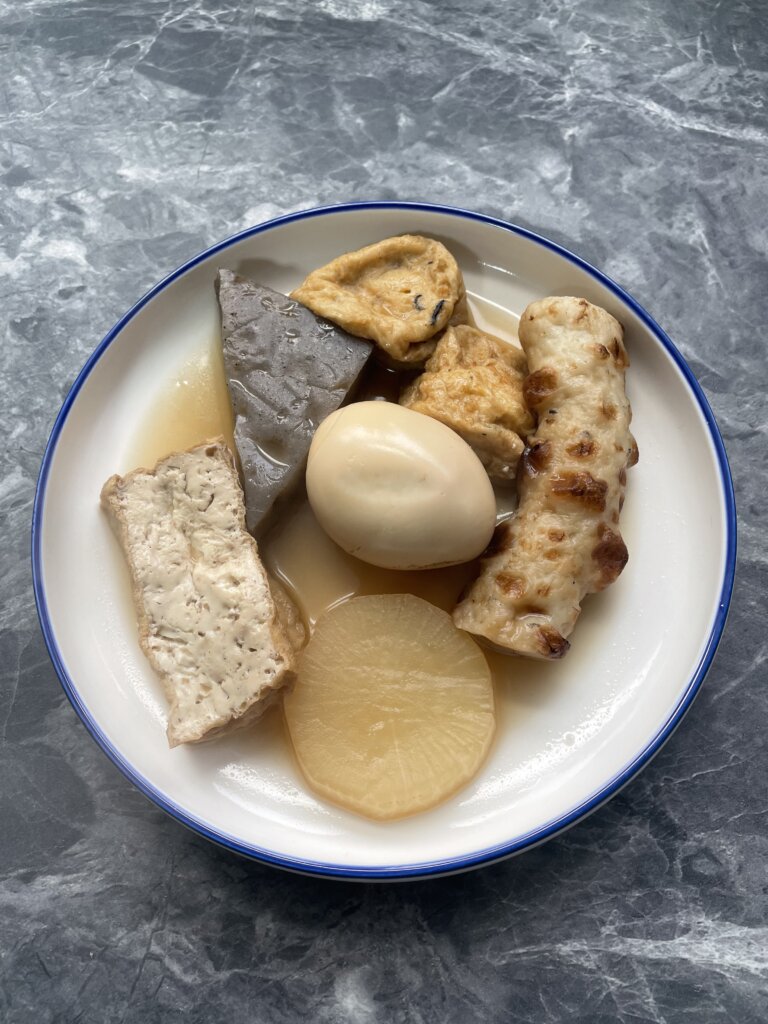
If you’ve ever visited Japan in the winter, there’s one smell you probably remember right away — the warm, savory aroma of oden.
Oden is one of the most iconic Japanese comfort foods, and for many people, it’s deeply connected to the winter season.
In Japanese convenience stores (konbini), oden used to sit right in front of the register. You could choose your favorite ingredients, place them into a cup, and enjoy them on the spot — a simple but unforgettable winter experience.
The broth would gently simmer all day, filling the store with that classic dashi scent. It truly felt like a seasonal tradition.
After COVID, fewer convenience stores continued offering oden, so it has become harder to find than it used to be.
But even now, alongside nikuman (steamed pork buns), oden is still widely known as one of the most beloved Japanese winter konbini foods.
What Is Oden?

So, what exactly is oden?
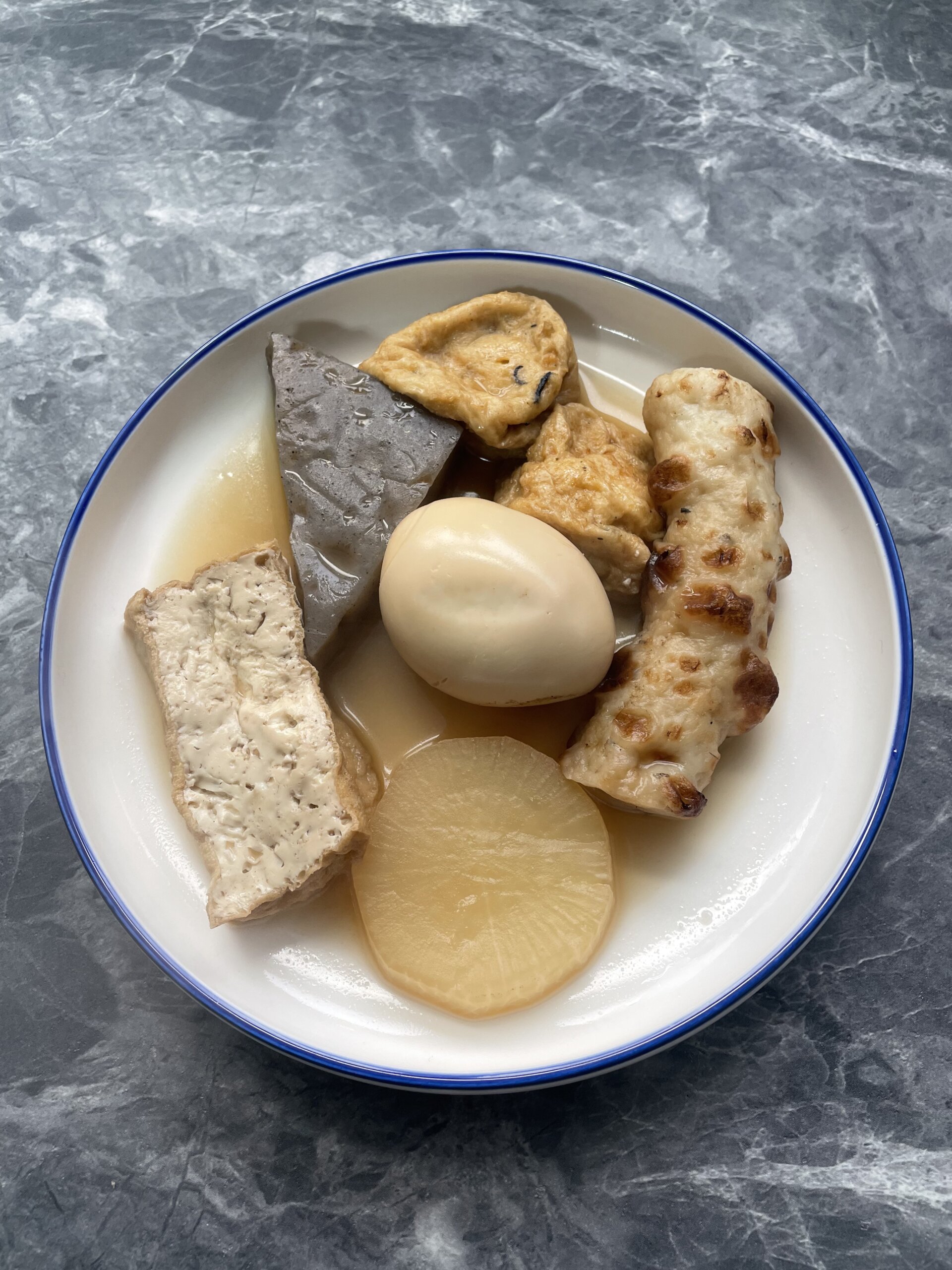
Oden is a Japanese hot pot dish made by simmering various ingredients — like daikon radish, eggs, fish cakes, tofu, and konnyaku — in a light soy-based dashi broth.
It’s simple, cozy, and incredibly satisfying.
Oden is the kind of dish that both kids and adults love, because everyone can find their favorite ingredient in the pot.
Why Make Oden in a Rice Cooker?
Traditionally, oden is cooked slowly on the stove.
But today, I want to show you an easier method:
Making oden in a rice cooker.
Using a rice cooker makes this dish almost completely hands-off.
Once everything is added, you can simply press “Cook” and walk away — no need to stand by the stove or keep checking the heat.
Honestly, if you forget about it for a while… even better.
The longer it sits, the more the flavors soak into every ingredient.
And since rice cookers automatically switch to Keep Warm, you can leave it resting until your next meal. That makes oden perfect for slow winter snacking or enjoying throughout the day.
Ingredients You’ll Need for Oden

One of the best things about oden is how simple the ingredients are.
A classic oden pot usually includes a mix of vegetables, tofu, fish cakes, and springy konnyaku, all simmered in a light dashi-based broth.
Here are some of the most common oden ingredients you’ll find in this easy version:
- Daikon radish
- Hard-boiled eggs
- Konnyaku (konjac)
- Atsuage (thick fried tofu)
- Ganmodoki (tofu fritters)
- Chikuwa (fish cake tubes)
Each ingredient absorbs the broth differently, which is what makes oden so fun to eat — every bite has its own texture and flavor.
What Does Oden Taste Like?
If you’ve never tried Japanese oden before, you might wonder what it tastes like.
Oden is not spicy or heavy.
Instead, it’s gentle, savory, and deeply comforting.
The broth is usually made from dashi, soy sauce, and a touch of seasoning, creating a light soup that slowly soaks into the ingredients over time.
Daikon becomes soft and juicy, eggs turn flavorful, and fish cakes take on that rich umami taste.
It’s the definition of Japanese winter comfort food.
Tips for the Best Rice Cooker Oden
Making oden in a rice cooker is incredibly easy, but here are a few key tips to make it turn out perfectly:
Don’t Overfill the Pot
Oden contains a lot of broth, so make sure you don’t fill your rice cooker more than about 70%.
If it’s too full, it may boil over during cooking.
Place Light Ingredients Near the Bottom
For the best color and flavor, put ingredients like daikon and eggs closer to the bottom of the pot.
They’ll soak up more broth and look beautifully seasoned.
Let It Sit on Keep Warm
This might be the best part.
After cooking, your rice cooker will automatically switch to Keep Warm, and oden actually tastes even better after resting.
Let it sit for 30 minutes to an hour, and the flavors will deepen even more.
Ingredients(2 servings)
Broth
Soy sauce: 1 tablespoon
Mentsuyu (Japanese noodle soup base): 1 tablespoon
dashi powder: 1 teaspoon
Water: 1⅔ cups
Main Ingredients
Daikon radish: 2 slices (½-inch thick)
Eggs: 2 large
Chikuwa: 2 large (or 4 small)
Atsuage (thick fried tofu): ½ block
Ganmodoki: 4 pieces
Konnyaku (konjac): 5 0
Instructions
1. Start by boiling the eggs first, since they take the longest. Cook them for about 12–13 minutes until fully hard-boiled, then peel and set aside while you prepare the other ingredients.

2. Slice the daikon radish into rounds about ½-inch thick, then peel the skin off each slice. Cut the konnyaku into bite-size triangles, and cut the atsuage in half. If your chikuwa is long, cut it into shorter pieces for easier serving.

3. In a separate bowl or measuring cup, mix together the soy sauce, mentsuyu, dashi powder, and water to make the broth.

4. Place all of the ingredients into the rice cooker pot, then pour the broth over everything. For the best color and flavor, place lighter ingredients like daikon and eggs closer to the bottom so they absorb more of the seasoned broth.

5. Close the lid and cook using the regular “Cook” setting on your rice cooker.

6. Once it finishes, the rice cooker will automatically switch to Keep Warm. Let the oden rest on warm for another 30 minutes to 1 hour if you have time, so the flavors soak in more deeply.
Important Tips
Do not fill your rice cooker more than about 70%, since oden contains a lot of broth and may boil over if the pot is too full.
Ingredients
Method
- Start by boiling the eggs first, since they take the longest. Cook them for about 12–13 minutes until fully hard-boiled, then peel and set aside while you prepare the other ingredients.
- Slice the daikon radish into rounds about ½-inch thick, then peel the skin off each slice. Cut the konnyaku into bite-size triangles, and cut the atsuage in half. If your chikuwa is long, cut it into shorter pieces for easier serving.
- In a separate bowl or measuring cup, mix together the soy sauce, mentsuyu,dash powder and water to make the broth.
- Place all of the ingredients into the rice cooker pot, then pour the broth over everything. For the best color and flavor, place lighter ingredients like daikon and eggs closer to the bottom so they absorb more of the seasoned broth.
- Close the lid and cook using the regular “Cook” setting on your rice cooker.
- Once it finishes, the rice cooker will automatically switch to Keep Warm. Let the oden rest on warm for another 30 minutes to 1 hour if you have time, so the flavors soak in more deeply.
Leave a Reply